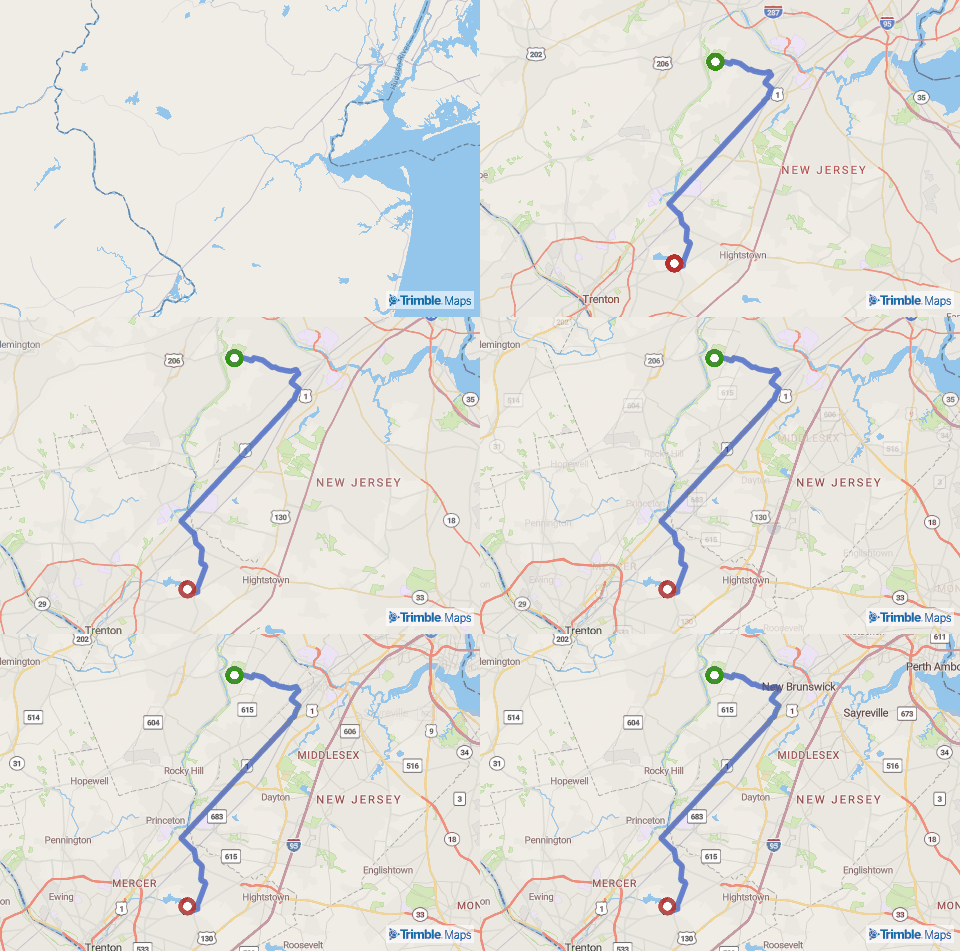
Think about the last time you hopped in your car and relied on your phone's navigation to get you where you needed to go. Simple, right? Punch in the address and a clear route unfolds, accounting for traffic and maybe a detour or two. Now, imagine that vehicle isn't your personal car, but a ten-ton truck hauling valuable freight across state lines on a tight deadline. Suddenly, that seemingly straightforward "Point A to Point B" journey becomes a complex puzzle with several major challenges baked in.
For commercial drivers and the carrier businesses that depend on them, the limitations of consumer-grade mapping apps become glaringly obvious.
These tools, designed for the everyday commuter, often fail to account for the myriad of physical restrictions, legal regulations and logistical challenges that define commercial transportation.
Routing a massive vehicle under a low bridge, navigating roads with strict weight limits, or inadvertently directing a hazmat carrier down a prohibited thoroughfare aren't just inconveniences – they lead to wasted time, hefty fines, compromised safety and ultimately, a significant impact on the bottom line.
The world of commercial trucking demands a level of map intelligence far beyond the capabilities of your average mobile app. Trimble’s routing and navigation solutions, including Trimble PC*Miler and Trimble CoPilot, deliver the map expertise and guidance fleets need to succeed.
Mapping smarter, not harder
The solution to commercial vehicle routing challenges lies in purpose-built maps and navigation. Unlike their consumer counterparts, these sophisticated tools are engineered from the ground up with the unique demands of the trucking industry in mind. They go far beyond simply displaying roads; they incorporate a wealth of specialized data and functionalities that are critical for safe, efficient, and compliant operations.
At their core, Trimble’s commercial maps are rich with truck-specific road attributes and restrictions.
This vital information helps drivers avoid potentially catastrophic collisions. Weight and load restrictions are meticulously integrated, preventing violations and safeguarding infrastructure. For carriers handling hazardous materials, designated routes and prohibited areas are clearly defined. Even seemingly minor details like left-hand and dangerous turn restrictions are factored in to enhance driver safety and prevent logistical nightmares.
Furthermore, correctly planning routes and calculating accurate mileage is paramount. Unlike consumer apps that might prioritize the shortest distance, commercial maps calculate routes based on truck-legal roads, providing precise mileage for contract rating, driver compensation and efficient load planning. They also consider legal and regulatory requirements, such as potential Hours of Service limitations, helping dispatchers and drivers plan routes that adhere to these crucial guidelines.
Behind this intricate web of data is a dedicated team of experts. At Trimble, our team works tirelessly to gather, verify and integrate this essential map information into our solutions.
"Making sure our commercial map data is both accurate and comprehensive is our highest priority,” says Tawni Marrs, Lead Data Scientist at Trimble. “It takes a deep understanding of what's what in the industry and a real focus on getting the details right. Ultimately, it's about making sure our users can always count on the information we provide."