In today’s competitive market, the ability to effectively use and analyze location data is a crucial component of the quality of service provided by transportation and logistics companies. From planning routes to managing resources, driver safety to customer service, locations are in many ways as important as road and map data. That’s why Trimble has created a database of locations tailored to the needs of our industry.
Rest stops, stores, gas stations, warehouses, distribution facilities, manufacturing sites and more: without a clear view of these places, it can be difficult for carriers, shippers and their teams to do their jobs. In the piece below, we explore what makes for good location data, its impact on operations and how transportation companies can use it to significantly enhance efficiency, reduce costs and deliver better service to customers.
How we make location data more valuable
Location data plays a vital role in how fleets operate, especially in the challenging last mile of delivery. Several different elements comprise location data: GPS coordinates, address information, geofences, entry and exit gates, facility details and more. The more data you have, the more complete your picture of a particular location.
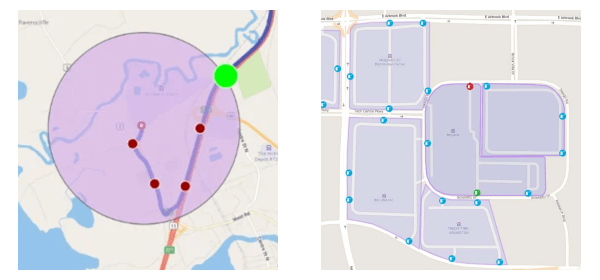
While several of those details are well understood, some are more complex. “Geofences,” for example, are virtual boundaries around specific locations. These are set up by navigation solution providers to denote the geographic space near a particular location and mark the location’s outline with a collection of GPS coordinates.
In consumer mapping applications, geofences are traditionally circular. But the Trimble Geographic Information System (GIS) team goes a step further. The boundary polygons we use in our own solutions can be drawn to any shape, allowing for a precise perimeter around a specific location and we’ve implemented them for millions of locations.
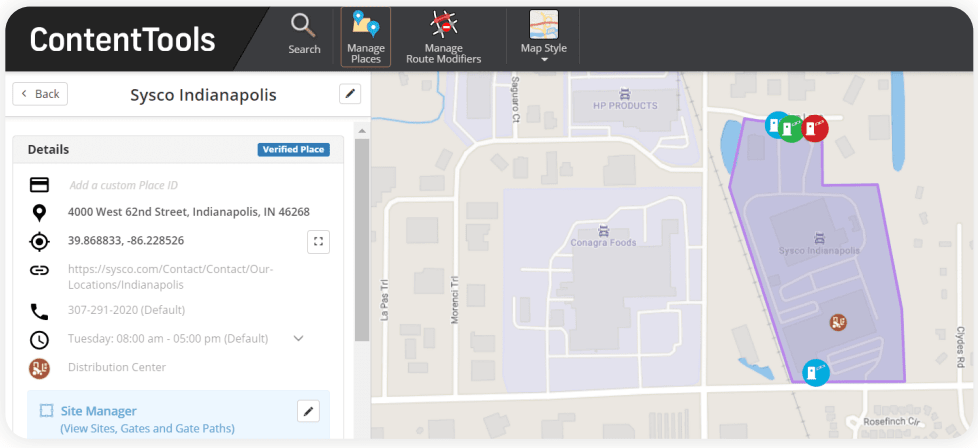
More precise polygonal geofences reflect a location’s true size, geography and road connections. They allow for a clearer picture of how a vehicle can access a location from surrounding roadways, and also make it easier to mark where entry and exit gates are and exact locations associated with an address.
In addition, we enable fleets to customize their location data to include additional details, such as a customer’s contact information, phone number, and custom notes about how best to get the job done in that specific facility. By adding their own details to public commercial places, companies can optimize routes, avoid known hazards, and ensure that drivers have the most accurate and relevant information at their fingertips.