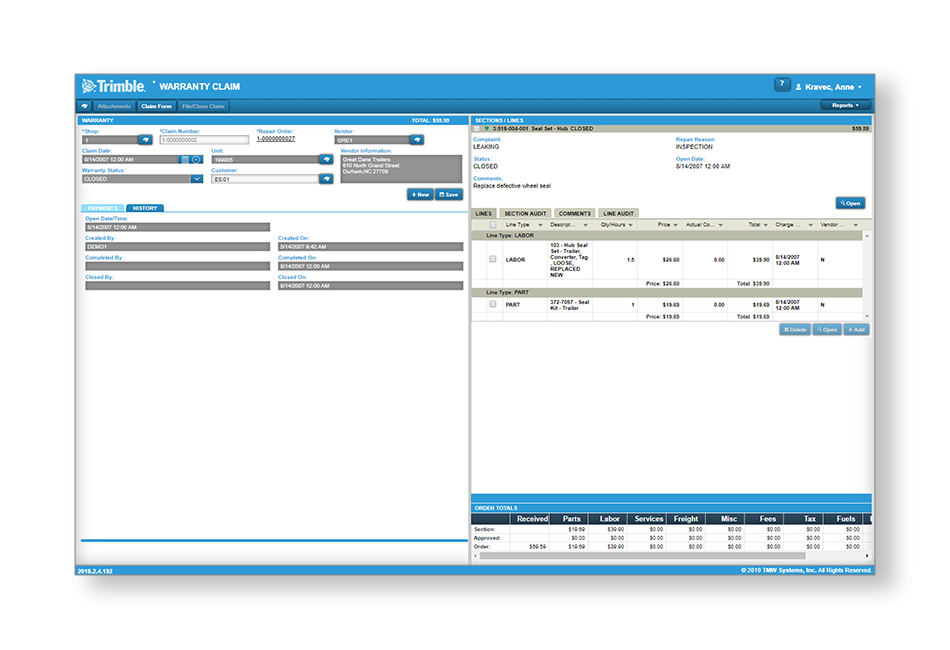
An effective warranty management process is for a fleet of any size and for almost any type of asset or unit. In most fleet management environments, without a platform or process to control warranties, savings or cost containment could easily go unrealized.
Fleet Managers are typically unable to fully realize how much of their operational expenses can be recovered through an effective warranty management process. By adding one module to your TMT Fleet Maintenance or Service Center solution, you can integrate a warranty management procedure to recover and claim what would otherwise be unrecognized savings. You can reap the benefits almost immediately and continue to experience rewards long after this module has paid for itself.
Align Coverage With Warranty Recovery
Think beyond bumper to bumper, think road to roof. In most instances, with the exception of consumable or expendable items, practically every system, assembly or part has some type of warranty coverage. Carefully go over the warranty documentation provided and if it is not readily available, insist on identifying the information from the supplying vendors or dealers to understand items that might have been previously overlooked.
The key to effective warranty management can be broken down by first identifying what types of coverages are available and understanding how to apply these to your current fleet or customers. The TMT base system, combined with the Warranty Module enables you to account for all of the following provisions or warranty types of coverages:
- OEMOriginal Equipment Manufacturer Warranty. Coverage from the dealer.
- Supplier Extended CoverageOn systems, assemblies or parts covered directly by the manufacturer. Claims may be supported by the manufacturer or via a dealership relationship connection, typically beyond basic OEM coverages for specific items.
- Aftermarket Extended WarrantiesPrograms offered by dealers to extend similar OEM type of coverage for selected items or blanket overriding policies.
- Part/Component Aftermarket WarrantiesVendor supplied warranties for parts or components purchased and installed by company mechanics.
- Vendor Supplied ItemsAftermarket Warranties for repairs conducted by outside service providers.
How TMT Enables Warranty Reimbursements
This is where the TMT Warranty Module and features work for you. Provisions are in place to identify and structure warranty parameters to maximize your opportunities for success. TMT makes effective use of VMRS coding (Vehicle Maintenance Reporting Standards) to build the specifications for your units or other assets, and readily identify the systems, assemblies and parts that are covered by the different warranty programs.
You are able to easily identify the start and duration of coverages for your units or assets, in a controlled platform. Taking this a step further, conditions of what constitutes coverage terms, can be defined by a combination of three different variables, such as time, odometer/kilometers or hours. This is similar to your basic standard automotive warranty – 36 months or 36,000 miles, where TMT allows for one more, such as 2000 hours on top of that. Essentially, you can utilize any interval or meter reading that can be recorded, which defines the conditional duration of the policy life cycle for warranties.
As vehicle and fleet maintenance repairs are being scheduled or conducted, TMT provides interactive alerts at several levels. This capability informs possible warranty parameters that can be utilized to determine the course of action that should be pursued, depending on the type of warranty that applies to the unit or asset covered and the conditions or protocols that have to be adhered to by the supplying vendor of the policy in effect.
TMT further provides reporting methods to identify when warranties are about to expire and allows you to act upon each type. The parts catalog provides methods to not only identify warranties by time, odometer and hour meters, but also to predetermine the expected lifecycle of an item and to pursue warranty policy adjustments with your suppliers to help you find additional savings.
Leveraging Fleet Data for Warranty Claim Management
Are suppliers or manufacturers betting against your transportation company? The thought that suppliers or manufacturers are working in their best interests may seem true to some, but keep in mind that it is really your responsibility to ensure that you structure a solid warranty recovery process. Supplying vendors/manufacturers or dealerships are generally more than willing to support and provide warranty reimbursements, replacement parts or some form of compensation, provided that you follow the basic conditions for each type of coverage as it relates to the failures your fleet experiences.
The TMT Warranty Module enables you to create individual or base Claims Pricing Tables for every supplying vendor, which provides the ability to define what is reimbursable based on part or component costs, labor rates, minimum hour charges, outside vendor repairs and any other possible fees or taxes that could be incurred to support a warrantable repair.